MARKETING AGENCY OF THE MONTH
WICHITA AGENCY DANCES TO THE
BEAT OF THE HOTEL BUSINESS
Opportunity knocked and Manning & Smith jumped at the chance
By Dennis H. Pillsbury
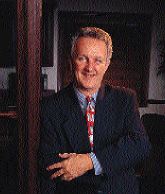
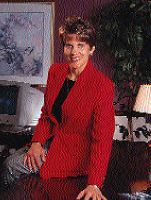 Craig and Christy Smith are right at home in the hotel business, traveling to some 25 cities a year to visit many of the 900 hotels they insure. Shortly after taking control of their agency in 1987, the Smiths decided to focus exclusively on hotel business.
In many ways, Manning & Smith Insurance can trace its current success to a fortuitous confluence in 1976 when Jack DeBoer founded the Residence Inn concept in the agency's hometown. Craig and Christy Smith, who at that time were agents at another Wichita agency, were friends of Jack DeBoer. The new hotel needed insurance coverage and the Smiths were given the opportunity to provide that coverage. They still handle that account.
That was the beginning of a niche market that was to grow into the Smith's specialty. But it certainly was a modest beginning. By 1981, the agents insured only three hotels. Then Residence Inn formed a partnership with Holiday Inn, opening the door for Craig and Christy to show their stuff to a much wider audience. And they impressed the new owners. By 1987, when Residence Inn bought out Holiday Inn and then sold to Marriott, they were insuring 125 hotels. Marriott's risk management department did due diligence and decided to leave the franchisee coverage with the Smiths. In that same year, Craig and Christy Smith bought the 66-year-old Manning Insurance Agency and it became Manning & Smith. Craig is president of the agency and Christy is vice president, operations.
Today, Manning & Smith handles the property-casualty and employee benefits insurance programs for about 900 hotels across the country. And that is all it insures. The other insurance business of Manning & Smith was sold off in 1998 so that the agency could concentrate on the hotel business.
Focused service is key
Craig and Christy recognized that the hotel business required their complete attention if they wanted to be successful in that field. At the same time, that also meant that they would have to hitch their wagon to that team. Their marketing and service needed to be focused if they wanted to grow and become one of the premier hotel agencies. And they decided that was exactly what they wanted to be.
Basically, the Smiths faced one of those unexpected moments in life where an opportunity opened up and they could decide just to continue with the status quo or make the move. It's a lot like Whistler said in the classic "Becoming" episode of "Buffy the Vampire Slayer": "Bottom line is, even if you see 'em coming, you're not ready for the big moments. No one asks for their life to change, not really. But it does. So, what, are we helpless? Puppets? No. The big moments are gonna come, can't help that. It's what you do afterward that counts. That's when you find out who you are."
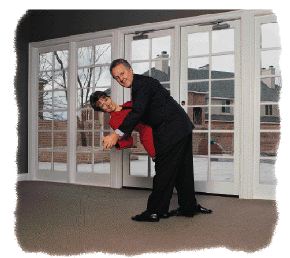 They were ready. Craig had worked for Crum & Forster before entering the agency business. He worked in loss prevention, setting up safety and loss prevention programs. He'd been prepped for this. But it came down to this moment. Do you continue with a successful agency business or do you move beyond and try to become something unique--to carve out a place?
Just as Whistler said--It's what happens afterward. The first step is scary, but the follow-through is what differentiates the successes from the also-rans.
The focus really has been the key to success. Everything Manning & Smith does today is designed to make life easier for the hotels it insures. And their success illustrates just what it takes to achieve positive results in any niche market.
"We are intrinsically involved in the business of our clients," Craig says. "We request permission to go to general manager meetings to review the loss history with those managers. We talk to them about current loss prevention concerns such as blood-borne pathogens and slips and falls. We'll go anywhere they have their meetings. And we consider this all as part of the business of providing insurance to our clients. Loss prevention is part of the package. There's no extra charge."
And when they can't help out, Manning & Smith can call on the experts at their insurance partners. "We work with Dennis Miller, a safety specialist at the Zurich office in New Orleans. He's helped us enormously." Craig points to one problem involving valet parking at the Radisson in Memphis. "There were a lot of kids who were rushing to park the cars. There were the inevitable 'fender benders.' Dennis helped us set up a training program for the valets and the accident rate dropped precipitously."
The years of expertise also have been put to good use in terms of getting new clients. "When we go to a new potential client," Christy says, "we ask them to fill out a very simple, one-page form. We can price the product based on the information in that form." To supplement that information, Manning & Smith also gets three-year loss information. "And, as part of our marketing, we send hotel operators a disposable camera. We ask them to take pictures of 15 things. It's clever and it's fun. But it's also really helpful from an underwriting standpoint. We're really able to determine the price for coverage. And, since we pretty much have underwriting authority, except in the case of coastal properties, we can provide them with a price on the spot."
Manning & Smith's primary program is with Zurich U.S., with umbrella coverage with Fireman's Fund. The agency also works with Travelers and a number of other carriers.
"When we review a submission, we look at the loss runs and see how it fits in to the Zurich program," Craig says. "If we find a problem, we'll put them outside our program at first and work with them to lower their loss ratio. When they bring their loss ratio down, we'll put them into the program."
Immediate response (if not sooner)
"Another thing that we do is in the claims area," Christy continues. "We have clients call here with all claims. A site code is assigned to them immediately so we can keep track of the progress of the claim and so we also have data that shows us where claims are happening. Each insured can get a claims run. We can set up a matrix by site code, can sort by claim and can develop loss prevention initiatives based on that information."
Once a claim has been filed, if it's part of the Zurich U.S. program, there is an adjuster specifically assigned to the agency by Zurich. "We know who is handling the claim and can monitor what is happening," Craig says. "Over the last two to three years, we've really focused on improving claims service. The assignment of a specific adjuster has really helped."
Automation enhances service
Christy concludes that the really exciting part of this is that automation and "being in the forefront of how independent agents can handle a policy efficiently and effectively means we are in the position to double our hotel volume with the people we have on hand. In the Zurich program, which is pooled for rating purposes, we've been able to drastically reduce expenses. The number of people at Zurich handling the program has been reduced by 14 and two fewer people here. And we're able to offer even better service to our clients."
She adds proudly, "We're very organized. We have interlinks between ourselves and our companies and we put together a spreadsheet that outlines all hotels. We can update the spreadsheet rapidly. Policies can be updated immediately. What used to take several days now takes about five minutes. This means our staff can focus on keeping track of what is going on rather than paperwork."
The Smiths are constantly on the road, but in touch with the office. They visit about 25 major cities every year, meeting with clients and potential clients. "We travel once or twice a month prospecting in major cities and we're also out visiting current clients."
Manning & Smith is an example of an agency that faced a crossroads and achieved success by reacting. It's what they did afterward that defined the agency. And they're the Agency of the Month not because they did something that someone else couldn't have done--but just because they took the chance and did it. The results speak for themselves. *
©COPYRIGHT: The Rough Notes Magazine, 1999