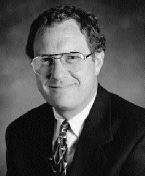
 Steve Nelson is vice president of St. Paul Medical Services.
Steve Nelson is vice president of St. Paul Medical Services.
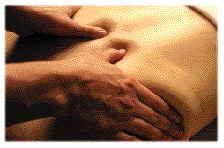
There was a time, not very long ago, when someone went for a massage to relax, to work out the kinks, to loosen up. Today, "massage therapy" is called alternative medicine, a "scientific manipulation of soft body tissues to return those tissues to their normal state." Actors used to attend drama workshops to keep their "instruments" (meaning their bodies) active between shows. Today, "drama therapy" is considered an alternative medicine where "theatrical expression encourages positive change in the psychological, physical, cognitive or social function of individuals with health or education problems." Going to art class to learn how to paint has now become "art therapy," a form of alternative medicine which "helps people communicate through the creative use of paint, pastels, clay or other art materials." It is considered "an effective treatment for the developmentally, medically, educationally, socially or psychologically impaired" and is practiced in mental health, rehabilitation, medical, education and forensic institutions.
This all may sound a bit strange, but the fact of the matter is that these and other "alternatives" to traditional medicine are moving into the mainstream of health care every day. We've already seen that many people have accepted acupuncture as a means of assisting in curing certain ills, and chiropractors, once shunned by the medical community, now are being accepted as a viable alternative to certain traditional medical treatments. Moreover, some physicians, confronted with greater consumer interest in these alternatives, are beginning to recommend certain therapies as complementary approaches to health care.
St. Paul Fire and Marine, long recognized as a leader in the professional liability field for the health care industry, believes that the complementary/alternative medicine arena represents great growth potential and is now offering, via independent insurance agents, professional liability coverage for those exposures. Statistics appear to back up St. Paul's contention.
 According to the New England Journal of Medicine, as of 1994,
60 million American adults used alternative medical therapies at an estimated cost of $13.7 billion, of which $10.5 billion was paid out of pocket. The number of visits made to providers of alternative medicine (425 million) exceeded the number of visits to all U.S. primary care physicians (388 million). More than 70% of patients did not tell their physicians about their use of alternative therapies. From the Journal of Family Practice, we learn that more than 60% of medical specialists had recommended alternative therapies to their patients at least once in 1993.
According to the Journal of the American Medical Association, a 1997 study showed that 4 out of 10 Americans used alternative medicine therapies that year. The study also showed that total visits to alternative medicine practitioners increased almost 50% from 1990, and exceeded the visits to all primary care physicians. The AMA Journal study showed that between 1990 and 1997, the prevalence of alternative medicine increased by 25%, with the total number of visits increasing by 47% to 629 million in 1997.
And there's more evidence. In a major move toward alternative medicine, the University of Minnesota announced this past June that it will offer the country's first graduate-level minor in "complementary healing" starting this fall. This summer, the university opened its first alternative medicine clinic in Minneapolis, offering patients everything from acupuncture to massage to herbal medicine.
The university also said it would encourage scientific research to see which kinds of treatments work and which do not. When the announcement was made, Dr. Gregory A. Plotnikoff, an assistant professor of internal medicine and pediatrics, said: "Ten years ago, we never ever could have seen something like this happen at the university. The whole culture has undergone kind of a sea change."
Mary Joe Kreitzer, who is spearheading the graduate program as director of the university's Center for Spirituality and Healing, said that the move "reflects that this whole area of complementary, alternative medicine is a legitimate area of both inquiry and practice."
Enter St. Paul Fire and Marine, ready to offer a "broad range of professional liability coverage to complementary and alternative medicine providers through its medical services operation. The coverage, which includes comprehensive health care-related property, casualty and professional liability insurance, is available to providers who practice acupuncture, art therapy, biofeedback, dance therapy, drama therapy, homeopathy, massage therapy, music therapy, naprapathy, naturopathy, polarity therapy and reflexology.
"We are moving into this area for a number of reasons," said Steve Nelson, vice president of St. Paul's medical services operation. "First, as a carrier, we deal exclusively with independent agents. Many of them have come to us and said that this is a field we should move into. In addition, we have a good deal of feedback from providers of such services. And also, our overall philosophy has been that we are providers of insurance coverages to the health care industry. This seemed like a logical step. Our research indicates that complementary and alternative medicine therapies are a growing business and are becoming mainstream treatment options for many consumers. So we believe offering liability coverage to complementary and alternative medicine providers fits in with St. Paul Fire and Marine's specialty focus and complements our family of health care-focused liability products."
Nelson said that, in general, claims by complementary and alternative medicine providers are expected to be similar to those of traditional physicians. "Like most areas of health care, there is a degree of risk involved with practicing complementary and alternative medicine. The most common liabilities include mistreatment, failure to diagnose, trying to provide treatments that exceed the boundaries of their specialty and failure to refer," said Nelson.
The complementary and alternative medicine insurance form features claims-made coverage and allows providers to adjust their coverage limits when premiums are renewed. Coverage will be available in 49 states and, so far, about 35 states have approved the rate filings. Medical services can provide up to $65 million of professional liability protection for individual providers and higher limits for groups of providers. In addition, an optional reporting endorsement can be added to the coverage that would provide for defense of all covered claims if a provider retires or discontinues coverage.
From the underwriting side, Nelson said that St. Paul will look at licensing requirements for the insureds and how they differ from state to state and also acceptance by key trade associations. In some specialties, however, licensing requirements and trade association approval will be hard to come by, specifically those that involve drama therapy, music therapy and the like. But St. Paul recognizes that some of these are untried areas and is willing to take the plunge. "In some of these areas, we will have to learn as we go along," said Nelson. *
Definition of terms
In the brave new world of alternative medicine, there are some "definitions" that might be worth keeping handy. St. Paul Companies provides the following list:
Acupuncture--Acupuncture seeks to treat health on the level of Qi (pronounced "chee"--which is used to describe one's inner energy/strength). Needles are inserted along a body's pathway--called meridians or channels--where Qi flows. The underlying theory is that the meridians influence how Qi flows to internal organs; therefore, it can affect both the structure and function of organs.
Art therapy--Helps people communicate through the creative use of paint, pastels, clay or other art materials. An effective treatment for the developmentally, medically, educationally, socially or psychologically impaired, it is practiced in mental health, rehabilitation, medical, education and forensic institutions.
Dance therapy--Psychotherapeutic use of movement as a process that furthers the emotional, cognitive and physical integration of the individual.
Drama therapy--Using theatrical expression to encourage positive change in the psychological, physical, cognitive or social function of individuals with health or education problems.
Homeopathy--Uses natural substances (plants, minerals or animals) in very small doses to stimulate a person's natural defenses. Uses theory that a substance that causes symptoms in a well person can also cure similar symptoms when they result from illness.
Massage therapy--the scientific manipulation of soft body tissues turns those tissues to their normal state.
Music therapy--Use of music to effect positive change in the psychological, physical, cognitive or social function of individuals with health or education problems. Therapy advocates use of voices or sounds as a means of expression. The way people sing, play and communicate musically with others can reflect their emotional or social problems.
Naprapathy--Using manually applied movements to bring motion, thereby releasing abnormally tense and rigid ligaments and muscles.
Naturopathy--A therapeutic system that does not use drugs, but employs natural forces such as light, heat, air, water and massage. Remedies include utilizing clinical and laboratory diagnostic testing, nutritional medicine, and medicines of mineral, animal and botanical origin.
Polarity therapy--Balancing opposite energies within the body to promote mental, physical and emotional health. May use guidance in diet, exercise, attitude and lifestyle.
Reflexology--Uses pressure points on the feet to alleviate pain in organs and other parts of the body.
©COPYRIGHT: The Rough Notes Magazine, 1999