SOUND INTERNET SOLUTIONS
ASPs:--GREAT OPPORTUNITY OR DISASTER IN WAITING?
Application service providers can take away
the headache of computer problems--or cause them
By John Ashenhurst
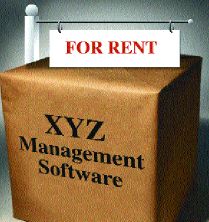 You've probably heard or read the acronym "ASP." It means "application service provider" and evolved from "ISP" or "Internet service provider." The ASP concept has four elements: the software runs on the ASP or host computer rather than yours; you access the ASP's computers through the Internet; you view and operate the software through a browser (e.g. Internet Explorer) on your PC; and you rent the software rather than buying an extended license to it.
ASPs have the potential to reduce the level of technology stress in your office. And in some cases they can provide solutions to problems the industry has struggled with for decades. But they can also destroy or severely damage you business.
We'll look at an overview of what ASPs have to offer, the dangers implicit in ASPs and how to mitigate them, ASPs relevant to independent agents, and finally what the future holds for ASPs and computing in general. A related sidebar appears on page 63 and lists relevant ASP Web sites.
The promises
What are ASPs good for? Why would you want to use one? There are a number of reasons--some more convincing than others. Let's take a look.
No need to install or upgrade software: It's a real hassle to install a round of upgrades and then keep up with them on all the PCs and servers in your office. If it's all done on the ASP host system, you don't have to deal with it. On the other hand, there may be some problems. Some part of installation and upgrade cycles involves data conversion and entry, training, workflow issues and the like. An ASP solution doesn't make those problems go away. And what if the ASP's upgrade schedule doesn't match yours? Will you have the choice to stay on an older release for a while?
No need to do daily backups: Many agencies don't do backups often enough and then don't store the copy off site. An ASP takes care of this chore.
Built-in disaster recovery plan: Having your software and data hosted by an ASP and available through the Internet should mean that were your building to suffer some disaster, you could be back online almost immediately. Of course if all your paper records are gone and you don't have everything loaded in your files, you'd still have a problem.
Less frequent hardware upgrades: Software upgrades often require hardware upgrades and that can be very expensive. With your software hosted, you should be able to use existing hardware longer since it's the hosting hardware, not local hardware that may need to be upgraded. Of course, the savings may turn out to be an illusion because you may want to upgrade hardware anyway, for instance, to go to LCD monitors.
Lower costs: The theory is that because the ASP enjoys an economy of scale, it can manage a shared data center efficiently and pass on the savings to you. But I wouldn't count on much savings. You'll still need some help with your LAN, PCs, and software locally. You may need to upgrade to broadband Internet access for everyone in the office. And though the ASP may be able to achieve economies of scale, a commercial data center is much more expensive to operate than your agency environment because it has to do more than you do (e.g. elaborate security arrangements). Rather than expecting lower net costs, it might make more sense to expect more predictable expenses not subject to huge spikes. And with less worry about technology, it should be possible to pay more attention to the insurance business.
The risks
Letting someone else host and manage your software carries potential risks. Having the right ASP can be a delight. Having the wrong ASP can ruin your day--or your business.
Interruption of service: If you manage your own technology and software, you can call for help when you need it. What if your ASP fails--from a technological or business point of view? Certainly, you'll want a service level agreement (SLA) that spells out the responsibilities of the ASP, with penalties for inadequate performance. But ultimately a contract won't protect you. The ASP must have the financial, technical, and cultural wherewithal to actually run its business successfully. In the larger world, some ASPs have disappeared overnight without warning. At least in some application areas in this industry, there are more ASPs than the market justifies. Some will be gone a year from now. And since you'll depend on the Internet, any problem there could cripple your ability to get work done and take care of your customers.
Security: Making your LAN secure is much less of a problem than making an ASP environment secure. An ASP must deal with hacker attacks and potential staff security breaches. A careless or devious ASP could compromise your data, inadvertently make it available to others or use it for its own purposes. An incompetent ASP might corrupt your database--with you not finding out for weeks.
Software integration: If you run some of your software on the ASP host system and other software locally, you need an effective arrangement for integrating some of the data and applications. Integration can be difficult enough even when all the software operates on one computer or at least within your agency. Integration can be problematic between local and remote computers.
The protection plan
That said, if you find the ASP alternative attractive, here are some steps you can take to minimize your risk.
Non-critical applications: Some ASP applications are critical to the day-to-day life of your agency; others you could live without. Clearly if you use ASPs only for non-critical applications, you'll face less risk than with critical applications. On the other hand, you may not get as much benefit either.
Second-sourcing: Having an alternative ASP supplier that you could move to quickly and without too much trouble makes using an ASP more palatable. If you use an ASP whose software can also be run in-house on your LAN, that could provide a workable "Plan B."
Known quantity: It's best to work with an ASP that you already have reason to trust because of a past, positive relationship. If the ASP vendor has been reliable and effective in the past, that's some indication that they'll continue to do what's necessary--now in an ASP environment--to take care of you.
If you do business with an ASP, you must have a disengagement plan ready at the beginning of the relationship. You must assume that sooner or later you or your ASP will go on to other things. You need to know how you can get your data back, the format it will be supplied in, and what the service will cost.
ASP varieties
ASPs come in a number of varieties that are worth understanding. We'll look at some examples below.
Infrastructure vs. software: Infrastructure ASPs basically provide a remote data center. They may not be in the software business and are happy to host all kinds of software, including products that compete with one another. They can provide flexibility but may provide only technical, not application, support. Software ASPs generally host their own software--which they support--but usually have no interest in hosting products from other sources.
Windows verses native IP applications: Some ASPs host Windows software and use the Citrix Metaframe environment to make it appear to be running locally. The Windows software may be mature and highly dependable but may not take full advantage of the Internet environment. Native IP applications are designed and built specifically for operation on the Internet. They usually make fewer demands on the host's servers and therefore may be more cost-efficient and scalable. They're also more likely to make full use of the Internet environment, including networking with other, remote software services. On the other hand, native IP software is likely less mature and may contain more bugs or inadequacies than older Windows software.
Single purpose verses enter-prise verses cross-entity ASPs: Many ASPs are one-trick ponies. They host a single solution to one need, e.g., an online library. Other ASPs provide comprehensive packages. Hosted agency management systems are an example. Finally, some ASPs are breaking new ground by offering solutions that cross entity boundaries and provide a shared solution to all participants in a value chain. As an example, certificate ASPs serve the agency, the carrier, the insured, and in some cases the certificate holder all out of one database and software package. By using cross-entity solutions, the value chain as a whole can be made much more efficient.
Stand-alone verses background service verses integration plat-form ASPs: Most ASPs today provide standalone systems that don't much care about other software you operate nor do they provide any way to integrate the data with other functions. A few new ASPs exist only as remote services--with no user interface. Some rating engines are in that category. Their job is to serve other, primary software. And finally, another category just emerging is the integration platform ASP. That group is especially effective at integrating a variety of software that comes from other sources, some from ASPs and some, perhaps from your own in-house software. The integration platform ASPs will become increasingly important with the explosion of background service providers.
Some industry examples
Several classes of agency management system ASPs are available or promise to be soon. Ajasent hosts several different agency management systems and will host email and office utility functions as well, creating a completely hosted environment. Ajasent, an infrastructure ASP knowledgeable of the insurance industry, can provide a neutral court for hosting and integration of several different brands of management systems for larger agencies created via acquisition and merger when it's too much trouble and too expensive to move all the agencies to one platform.
Both Applied (with TAMCentral) and AMS (with AfW Online) host their classic Windows-based agency management systems as well as continue to license the Windows packages for local agency installation and use. Having both hosted and local choices makes extrication from the ASP environment at least possible if necessary.
A new crop of agency management system-like offerings from Xdimensional and SPAN2 are working on native-IP applications as well as an environment within which they can integrate other Internet-based software. In the future, integration platform ASPs are likely to play an increasingly important role.
A clutch of insurance or certificate ASPs has sprung up in the last year. They make it possible for insureds to retrieve and distribute certificates electronically--with the agency or perhaps the carrier establishing templates and business rules for their use. With at least one vendor, the certificate holder itself can request a certificate. The insight behind these offerings is that some insureds would appreciate more direct control over the issuance of their certificates. When the insured is willing to do the work, the agency can spend less time on the mechanics of (sometimes massive) certificate generation and distribution. The services work because all parties in the certificate value chain share a common ASP and database. On the other hand, they may not work because the ASP database is not integrated with any agency or other party's systems or databases. But even without integration, the service can be so attractive to all parties that double-entry may be justified.
Several varieties of claims ASPs are available. One type focuses on claims-making and workflow--including state reporting. Another supports claims mitigation. A third group provides salvage auctions. A fourth supplies dispute resolution services and another risk management information services.
Many electronic publishers that provide their content via CD-ROM now offer online, that is, ASP versions of it. That can make the material more timely since the online libraries can be updated daily--rather than the typical month or more cycles of CD-ROM versions. Some underwriting reports suppliers now offer ASP-access as successors to their private network/local-Windows (or DOS) ordering and retrieval systems.
Although not always called ASPs, Internet-hosted services to agencies (rating, forms, submission, policy detail, claims status, payment status, etc.) provided by carriers really are ASPs. They provide increasingly complete services, though only for one carrier at a time, thus causing workflow and training problems for agencies. Rather than trying to make money directly on these services, at least some of the carriers want to gain competitive advantage through their single-carrier ASPs. Some third parties are working on ASP solutions that mediate between an agency and multiple carrier ASPs so that the agency can deal with a single user interface and workflow.
The future
Microsoft, IBM, and Sun are each working intently on software infrastructure that can be used to link a variety of remote services into what appears to the user to be one seamless, extensive application--and the ACORD XML standards effort is right in the middle of the picture. Though the ideal won't ever be achieved, it is likely that we'll see a proliferation of background service ASPs that are herded together by integration platform ASPs, with you being able to choose from a menu which services you want to subscribe to--and they can be instantly available.
Will all insurance software migrate to the ASP model? Probably not. It's more likely we'll see a hybrid environment of local and hosted software--all integrated--without users having to care much where anything lives.
Finally, though most ASP software usage now occurs through browsers, we'll see less rather than more over time. Increasingly ASP applications will have thin clients (like browsers) but will act more like rich-interface Windows applications.
ASPs have a great deal of promise but we're early in the technology cycle and we have a lot to learn about operations, cost, security, performance, contract and other issues. But all-in-all, over time, ASPs will be a good thing for agents and their customers. *
The author
John Ashenhurst, is editor of "Sounding Line," a monthly newsletter covering insurance and the Internet. For more information see www.soundingline.com. His company, Sound Internet Strategy, provides consulting, Web site evaluation, and seminar services to independent agents and their trading partners. He can be reached at johnashenhurst@
soundingline.com or (978) 318-1944.
ASP RESOURCES
Compiled by John Ashenhurst
| Risk Management Information Systems:
Corporate Systems
http://www.csedge.com/
CS ClaimSuite
Envision Technology Solutions (ETS)
http://www.envision-ts.com/
WebEnvision
Risk Laboratories
http://www.risklabs.com/
RiskConsole
Agency Management Systems ASPs:
Ajasent
http://www.ajasent.com/
Hosts variety of agency management systems
AMS Services, Inc.
http://www.ams-services.com/
AfW Online
Applied Systems
http://www.appliedsystems.com/
TAMCentral
Insurance Island
http://www.insuranceisland.com/
Sintech Software
http://www.sintechsoft.com/
ProSpector
SPAN2
http://www.span2.com/
Agency Suite
Xdimensional Technologies
http://www.xdti.com/
ASPN (Application Service Provider Network)
Information ASPs:
ADR (American Driving Records)
http://www.mvrs.com/
Web MVRs
A.M. Best Company
http://www.ambest.com/
Carrier ratings
ChoicePoint
http://www.choicepointinc.com/
ChoicePoint Online
iiX (Insurance Information Exchange)
http://www.iix.com/
ExpressNet
IMMS (Insurance Marketing & Management Services)
http://www.imms.com/
Agency marketing and management library
Insurance Services Office (ISO)
http://www.iso.com
ISONet
JCRS
http://www.jcrs.com/
Inland Marine underwriting and claims solutions |
Silver Plume
http://www.silverplume.iix.com/
Insurance reference library
Education and training ASPs:
Argosy Interactive
http://www.argosyinteractive.com/
CE University
http://www.ceu.com/
Insurance Skills Center
http://www.insuranceskillscenter.com/
InsuranceStudy.com
http://www.insurancestudy.com/
OccuTrainer
http://www.occutrainer.com
Safety & health training courses
Certificates online:
Certificate Exchange
http://www.certexchange.com/
Certificate Management Solutions
http://www.certificatesolutions.com/
CertificatesNow.com
http://www.confirmnet.com/
eCertsOnline.com
http://www.ecertsonline.com/
Periculum Services Group
http://www.mgmttech.com/psg
VeriCert Exchange Network
http://www.vericert.com/
Claims online:
ACES Technologies
http://www.acestechnologies.com/
Workers Compensation and auto
Actec Systems
http://www.actec.net/
Claim reporting services
ACV Insurance Services
http://www.acv-ins.com/
ACV Online - adjuster-policyholder collaboration
Axim Systems
http://www.axim.com/
First report of injury, WebDimensions/RM
Claim Resolver.com
http://www.claimresolver.com/
Dispute resolution
ClaimPort
http://www.claimport.com/
Transmission of WC claims info to states
Claims On Line
http://www.claimsonline.net/
Claims reporting
Claims3
http://www.claimscube.com/
Claims workflow |
ClaimsDesk
http://www.claimsdesk.com/
Tools for claims professionals
ClaimSettle.com
http://www.claimsettle.com
Dispute resolution
clickNsettle.com
http://www.clicknsettle.com/
Dispute resolution
Cybersettle
http://www.cybersettle.com/
Dispute resolution
DriveLogic
http://www.drivelogic.com/
Auto claims
Driversshield.com
http://www.driversshield.com/
Auto claims
First Notice Systems
http://www.firstnotice.com/
First notice of loss
FirstReport Software
http://www.firstreport.com/
First report of injury
Insurance Disposal.com
http://www.insurancedisposal.com/
Salvage auction
ptc-NET
http://www.ptc-net.com/
Direct repair service via managed contractor network
ReplacementFinder.com
http://www.replacementfinder.com/
Replacement
SalvageSale.com
http://www.salvagesale.com
Salvage auction
Salvage Source 2000
http://www.salvagesource.com
Salvage auction
SettleOnline
http://www.settleonline.com/
Dispute resolution
WebMediate
http://www.webmediate.com/
Dispute resolution
Small business insurance ASPs:
AgencyPort
http://www.agencyport.com
Multi-carrier quoting, submission
InsureTrade
http://www.insuretrade.com/
Electronic trading floor and more
RiskClick
http://www.riskclick.com/
Collaboration platform |