

|
The Rough Notes Company |
|
 Post-war America in the 1950s was a "Happy Days" culture, characterized by exploding population, increasing job opportunities, suburban growth and the introduction of a new technology--television--which replaced radio as the choice for household entertainment. The Korean War began on June 25, 1950. In 1952, Dwight D. Eisenhower was elected president of the United States; and in 1953, an armistice was signed, ending the Korean War. Mickey Mantle won the American League Triple Crown. By mid-decade, however, America began to experience domestic problems, particularly in the area of civil rights. Following Rosa Parks' refusal to go to the back of the bus after a long day of hard work, African-Americans boycotted segregated city buses in Montgomery, Alabama. |
  |
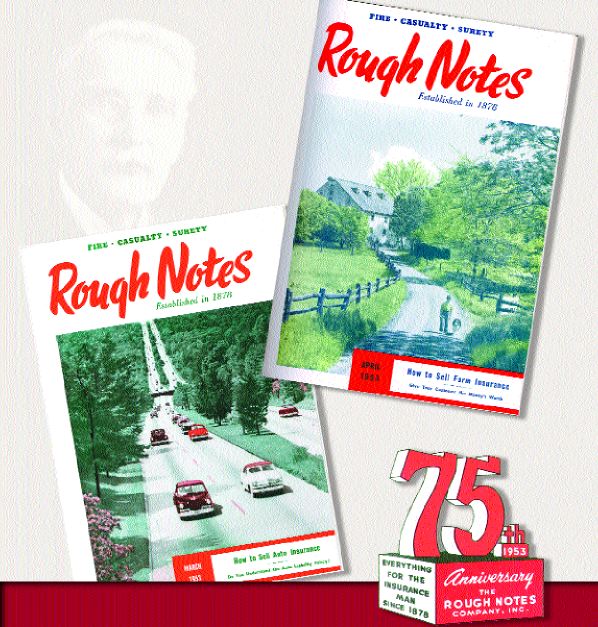  |
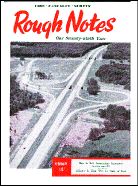
| Rough Notes magazine turned 75 in 1953. Throughout its first 75 years there had been only three editors: RN founder Dr. Henry C. Martin; Irving Williams; and James Gregory, who became editor in 1949. Rough Notes grew from a small newspaper designed to provide information for traveling field men in Indiana to a magazine with a monthly circulation of more than 24,000. It was the largest directly paid circulation in the fire and casualty business. |
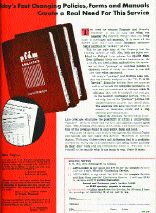
 While enjoying the growth of Rough Notes magazine, The Rough Notes Company itself was on the fast track. Growing from a retailer of a few insurance supplies and record books prior to 1900, it became a complete supply warehouse by the 1950s, providing millions of agency records and invoices each year. While enjoying the growth of Rough Notes magazine, The Rough Notes Company itself was on the fast track. Growing from a retailer of a few insurance supplies and record books prior to 1900, it became a complete supply warehouse by the 1950s, providing millions of agency records and invoices each year.
Following WWII, The Rough Notes Company published more book titles
|
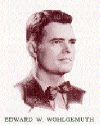 Albert Wohlgemuth, president of The Rough Notes Company, celebrated his 40th anniversary with the company. When he retired, he left a legacy of growth and prosperity behind him. Seventy-five percent of all insurance agencies in the United States used all or part of the Rough Notes Manual System. Wohlgemuth's son, Edward, succeeded him as company president and would serve for 22 years. |
 |
|
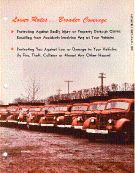 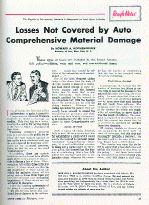 |
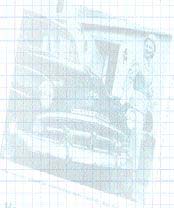
 Once again, automobile insurance captured the industry's headlines. This time, however, the industry was no longer concerned with a wartime lack of drivers and auto sales, but with compulsory coverage. The 1950s were marked with the growth of the suburbs and interstate highways--and thus new auto owners and drivers. Almost every suburban homeowner now owned at least two cars.  This boom led to auto insurer competition, which resulted in New York being the first state to adopt a bill in 1956 mandating compulsory auto insurance for every licensed driver in the state. A licensed driver had to furnish proof of financial security before he or she could register a vehicle. Meanwhile, the industry was trying to grapple with the high rate of auto accidents. |
 |
|
|
   |
 |
|
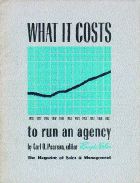 for the industry than any other publisher. The Rough Notes Pictorial Division continued to be a pioneer in pictorial and visual selling insurance aids, through Insurance Pictorial, Estate-O-Graph, Conservation Pictorial, folders and similar material. And The Insurance Salesman, which began as an offshoot of Rough Notes magazine, had become one of the largest life insurance magazines in the world by the 1950s.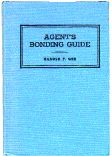
 Questions of the decade included: "What to do in a nuclear energy catastrophe" and "What to do with the claims such as property damage liability suits against the nuclear facilities."