CLASSIFYING RISK
By Linda D. Ferguson, CPCU
DON'T GAMBLE ON LODGING RISKS
Looking at casinos, hotels, amusement
centers, and other related operations
 Last week I was accosted by a Klingon, serenaded by a gondolier and enthralled by acrobats who flew overhead with ease. Yes, a visit to Las Vegas can send you around the world as you walk just around the block. On the flight home my thoughts turned to--classifications. What classification would those operations use and how could they be compared to similar operations in the rest of the country?
As with all classifications, the first step is often the most difficult. Exactly what is the operation? Where I stayed, the top floors and the largest square footage were filled with guest sleeping rooms. Casinos, bars, restaurants, shopping areas and various entertainment venues occupied the bottom floors. Close by, there were parking garages and parking lots, including valet and self-service parking.
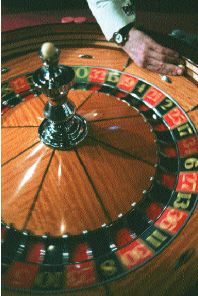
If there is a casino, the answer is very, very simple. Classification 43990 Gambling - casinos is the only classification that is necessary. The classification lists all of the possible activities that can take place in the casino operations and puts them all together. The classification is rated on payroll of all employees of all named insureds.
The next question follows--what is a casino? If a hotel has one slot machine in the lobby, is that a casino? No, according to the footnote under casinos. If the only gambling is through mechanical devices, that operation is to be classified as an amusement center.
If the hotel has not only the mechanical devices but also offers entertainment, restaurant, bars and guest rooms, how is it classified? The first place to look is the hotel/motel classifications.
There are four classifications that would apply to this situation and they are determined by the hotel's height and whether or not there is a pool or beach:
* 45190--Hotels and motels with less than four stories; with a pool or beach
* 45192--Hotels and motels with less than four stories; no pool or beach
* 45191--Hotels and motels in excess of four stories; with a pool or beach
* 45193--Hotels and motels in excess of four stories; no pool or beach
While the rates are different due to difference in exposure and experience, the footnotes on all four classes are the same.
The first exposure that is included and requires no extra charge is boats. If there are owned canoes or rowboats, coverage is to be provided by using Boats Endorsement - CG 24 12. The next logical step would be to say that if these boats are included, all other watercraft exposures are not and thus would require a separate charge if coverage is needed.
Golf mobile users are considered additional insureds and Form CG 20 0 is to be added. This would indicate that coverage for the golf mobile use is considered part of the exposures, so no charge is needed for golf mobiles.
Professional exposures are excluded and CG 22 45, which excludes specified therapeutic or cosmetic services, is to be attached. This would indicate that the liability exposure for these types of operations could be considered part of the operation with no extra charge, but all professional must be excluded.
The last part of the footnotes lists some specific exposures that may be common to the industry but do require separate charges:
* Gasoline stations
* Any health or exercise facility for which a charge is made. This would mean that hotels at which services (such as health clubs) are included in the overall room charge would not have separate charges.
* Restaurants
* Ski lifts or tow ropes--this does not indicate charge or no charge. So if a hotel operates a skiing operation and skiing costs are included in the overall room charge, the ski lift is still subject to a separate charge.
What about other activities that may be taking place at the hotel or motel that are not listed and are not necessary to the operation of a lodging--such as Klingon activities? The answer is in General Liability Rule 26, Classifications - Scope of Application. This rule states that certain operations may appear to need multiple classifications, but certain activities are considered included within the scope of a classification and those should therefore not be classified separately. Among the inclusions are exposures common to many hotel and motels such as advertising signs, elevators and escalators, electronic games, parking areas, swimming pools and vending machines.
Rule 26 also lists a number of operations that are always excluded and therefore need a charge. These include amusement centers, amusement devices, horses and mules, and any commercially-operated pools.
Where does all of this leave the Klingon? He was actually part of an amusement area located in one of the casinos. The amusement area was part of a Star Trek exhibit that included a simulation ride, a restaurant, exhibit, and gift shops. If part of a standard hotel, this would fall into the amusement center category and therefore would receive a separate charge--if it were a hotel and not a casino. The same could be said for the gondola ride and many other attractions in Las Vegas.
The final question rests on those slot machines that are everywhere in Las Vegas. They are not electronic games according to the casino class; they are part of an amusement center. Therefore, a separate charge should be made for electronic gambling devices in a hotel or motel.
Classifying lodging risks requires research. A hotel or motel may provide many services and offer many amenities that can be appreciated only by a guest. Maybe it's time to check out some of the local hotels and motels--surprise the spouse with a weekend away or take the family and discover all of the services offered. It might be the best time you ever had--researching the intricacies of the ISO classification manual. *
The author
Linda D. Ferguson, CPCU, has 30 years of underwriting experience with national commercial lines carriers. She now operates a consulting business,
Pleasant Street Consulting Company, in Newtonsville, Ohio. She can be reached at ldfcpcu@hotmail.com.